Principles and Modalities of Continuous Kidney Replacement Therapy (CKRT)
Small solutes present at a higher concentration in the dialysis fluid (dialysate), such as bicarbonate, diffuse from the dialysate into the blood.
Dialysate flows on the other side of the membrane in the opposite direction to blood flow (Countercurrent), maintaining the concentration gradient needed for small-solute removal along the entire semipermeable membrane.
Almost all modern dialyzers are high-flux dialyzers, capable of removing larger substances than older low-flux dialyzers could remove.
However, unlike hemofiltration, hemodialysis does not efficiently remove larger middle molecules.
Ultrafiltration can also be performed during hemodialysis by applying a transmembrane pressure difference (Transmembrane Pressure, TMP).
Unlike the large ultrafiltration volumes used in hemofiltration to achieve substantial solute removal, ultrafiltration volumes during hemodialysis are relatively small and contribute little to small-solute removal. They are primarily used to achieve net volume removal.
Overview of modalities
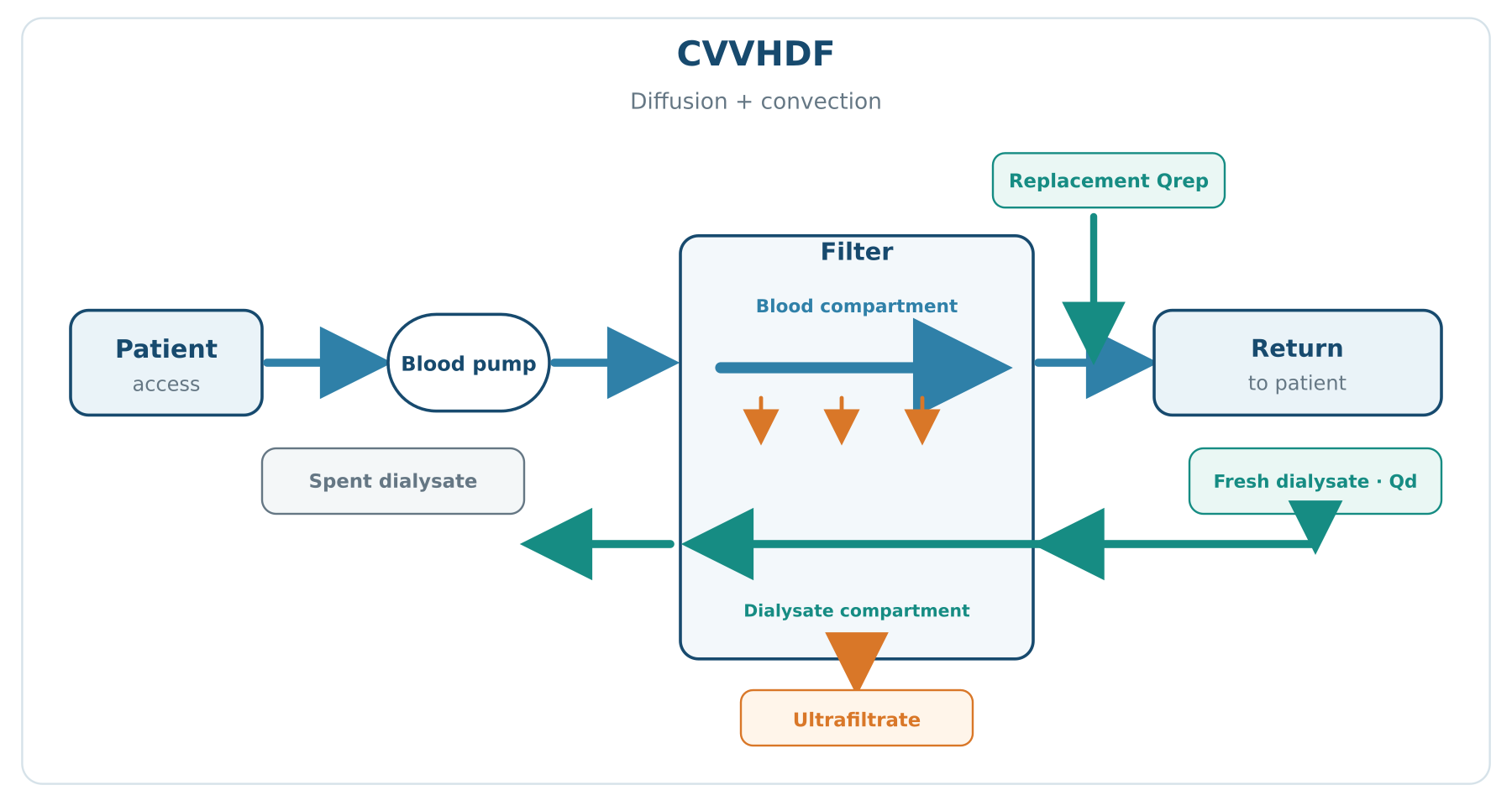
Modalities are named according to the transport mechanism used, rather than treatment speed alone. CVVH relies mainly on convection, CVVHD mainly on diffusion, and CVVHDF combines both. SCUF focuses on ultrafiltration and fluid removal, while limited solute removal by convection remains possible. [1,3]
Diffusion
Diffusion, the principal mechanism of solute removal in intermittent hemodialysis (IHD), arises from a difference in solute concentration between plasma water and dialysate on opposite sides of the membrane, that is, the filter.
Convection
Convection, also called advection, is the bulk movement of substances with fluid across the filter membrane as a result of a hydrostatic pressure difference.
Thus, the main driving force in diffusion is the difference in substance concentrations across the membrane, whereas in the second mechanism it is hydrostatic pressure.
A note on the term convection
Although the term convection continues to be used, as is traditional in nephrology literature, to describe solute removal by hemofiltration, the physical transport of a substance by bulk fluid movement is technically more precisely called advection rather than convection.
Modality
Predominant solute removal mechanism
Dialysate
Replacement fluid
CVVH
Convection
No
Yes
CVVHD
Diffusion
Yes
No
CVVHDF
Convection and diffusion
Yes
Yes
SCUF
Ultrafiltration; limited solute removal by convection
No
No
Key terms and equations
Before explaining the modalities and details, the abbreviations must be understood:
Qb denotes the blood flow rate.
Qd denotes the dialysate flow rate.
Qrep denotes the replacement fluid flow rate.
QUF: the total ultrafiltrate rate leaving the blood compartment.
Qnet: the rate of net fluid removal from the patient.
SC: the sieving coefficient for solutes.
KUF: the filter's ultrafiltration coefficient.
TMP: transmembrane pressure, as calculated by the device system from circuit pressures.
In a simplified approximation, ultrafiltration rate is related by: QUF ≈ KUF × TMP.
Membrane properties and transmembrane pressure affect water flow, whereas oncotic pressure opposes filtration through its water-attracting force.
Convective clearance of solutes can be approximated by Kconv ≈ QUF × SC. SC is defined as the ratio of solute concentration in the ultrafiltrate to its concentration in plasma. This is an approximate relationship: solute clearance does not always equal QUF, and performance is affected by pre-filter dilution and solute and membrane properties. [1,3,4]
1.Continuous venovenous hemofiltration
Continuous Venovenous Hemofiltration – CVVH
CVVH relies mainly on convection: water moves across the membrane under a pressure difference, and ultrafiltrate (Uf) is generated by a transmembrane pressure gradient (Transmembrane Pressure, TMP) across the hemofilter membrane.
Convection can be represented by the following equation: Uf = Kf × TMP
Where Kf is the coefficient of hydraulic permeability.
And:
TMP = (Pb − Puf) − π
Where:
Pb: hydrostatic pressure in the blood
Puf: hydrostatic pressure in the ultrafiltrate
Π: plasma oncotic pressure
The clearance of a substance by convection, Cx, is estimated using:
Cx = Quf × S
And:
S = Cuf / Cp
Where:
S: sieving coefficient.
Cp: the substance concentration in plasma.
Cuf: the concentration of the same substance in the ultrafiltrate.
Water movement is accompanied by transfer of permeable solutes according to their sieving coefficient.
No dialysate is used in this modality; replacement fluid replaces most of the total ultrafiltrate. [1,3]
In a simplified circuit balance: QUF = Qrep + Qnet. QUF therefore does not equal net fluid removal from the patient: Qrep returns to the circuit as replacement fluid, whereas the difference Qnet represents the intended net removal, with other inputs and outputs included in the clinical fluid balance. [1,3]
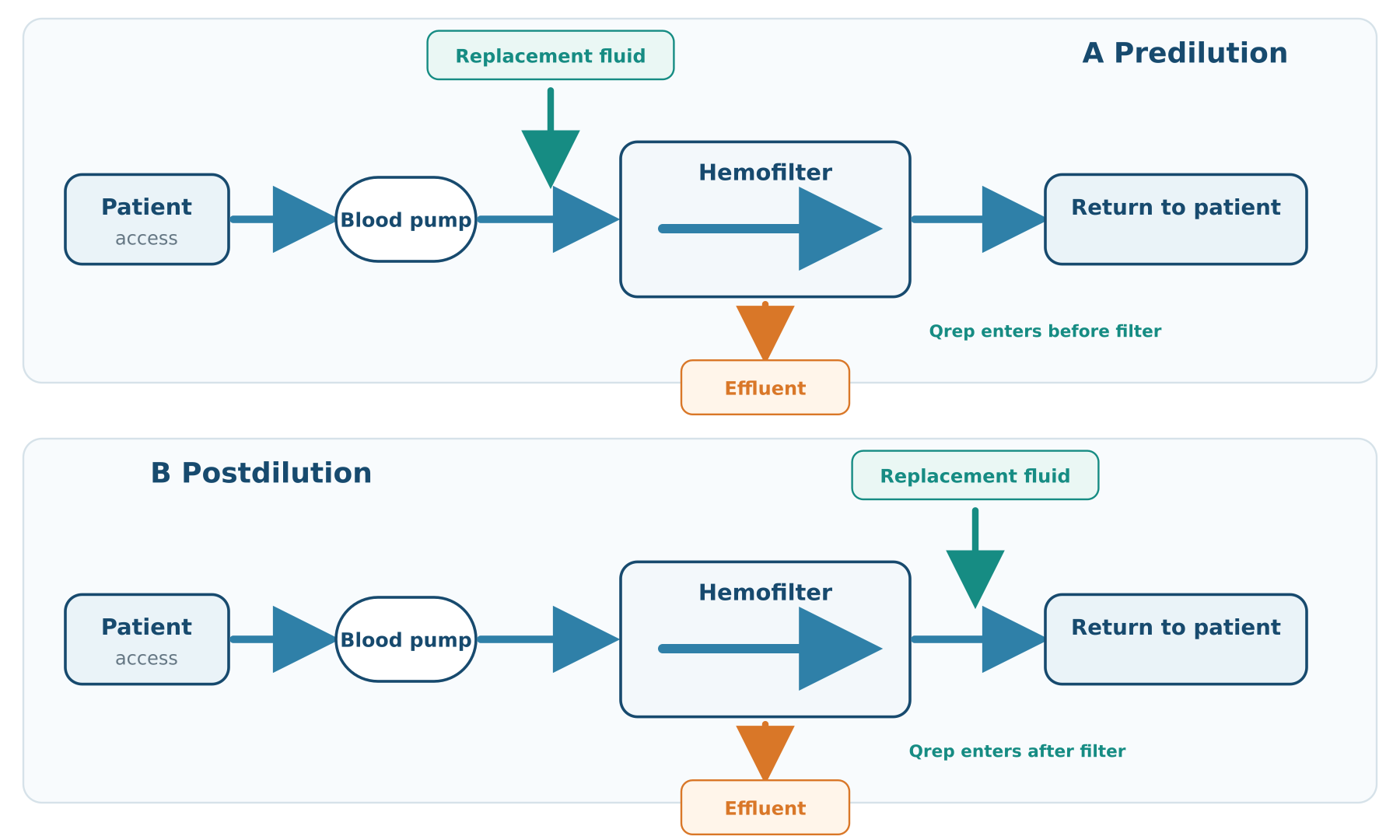
Replacement fluid can be infused before the filter (predilution), after it (postdilution), or at both sites.
Predilution lowers the concentration of solutes entering the filter, usually reducing clearance per ultrafiltrate volume compared with postdilution. The administration site also changes hemoconcentration within the filter. Actual dose must therefore be interpreted together with the replacement fluid site. [1,4]
KDIGO recommends an effluent volume of 20–25 mL/kg/hour as the target dose of continuous kidney replacement therapy in acute kidney injury. Dose is calculated from effluent volume, while net fluid removal is adjusted separately according to fluid balance. A higher rate may need to be prescribed to compensate for treatment interruptions. [2] Solutes are removed at approximately the same rate.
Ultrafiltration alone, however, will not change the plasma concentration of a solute because it is removed with fluid, leaving the overall concentration unchanged. This high ultrafiltration rate would also rapidly cause hypovolemia; replacement solution is therefore administered.
Administering replacement solution lowers the concentration of the removed solute in plasma water by dilution, particularly when the substance, such as urea, is absent from the replacement solution.
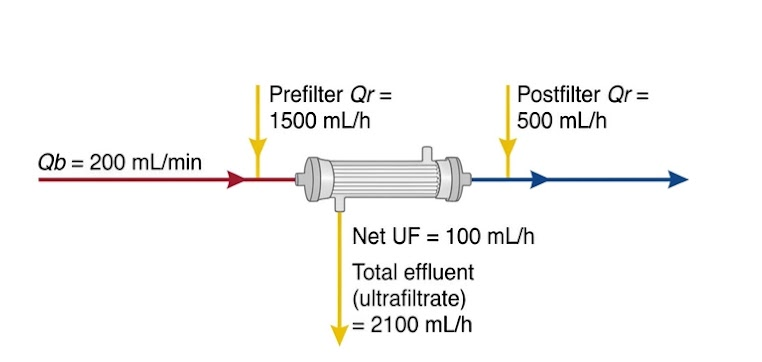
Qr: 1500 mL/hour pre-filter and 500 mL/hour post-filter
UFnet 100 mL/hour
Qef equals 2100 mL/hour
2.Continuous venovenous hemodialysis
Continuous Venovenous Hemodialysis – CVVHD
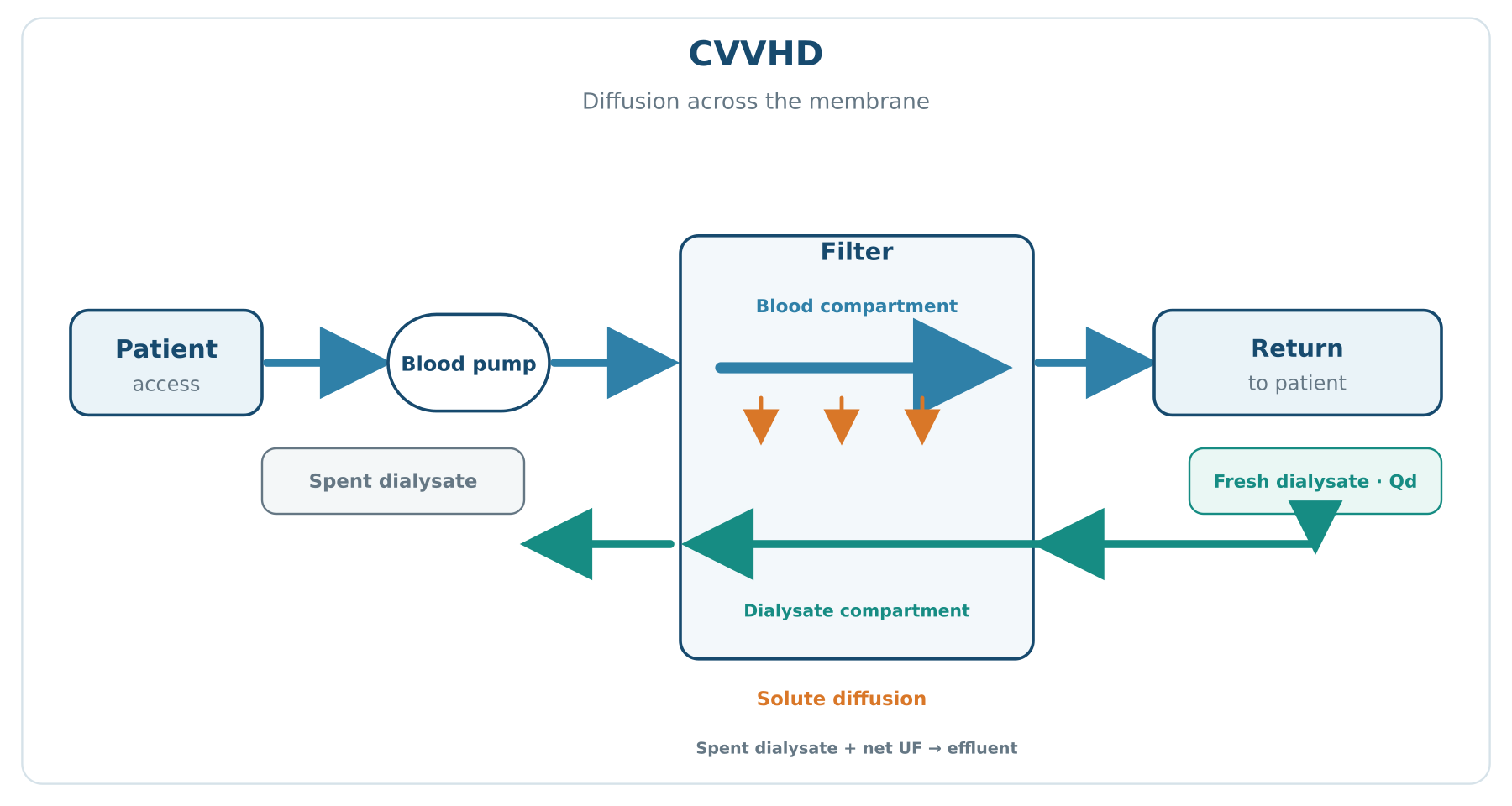
CVVHD relies mainly on diffusion: solutes move across the membrane down the concentration gradient between blood and dialysate (from higher to lower concentration). Dialysate is usually passed in the opposite direction to blood flow to maintain the concentration gradient along the filter.
Replacement fluid is not usually used. Net fluid removal is achieved through an overall negative balance (that is, an effluent volume exceeding total fluid input to the patient). [1,3]
Solute diffusion Sd can be estimated using: Sd = (Cg / Mt) × D × T × A
Where:
Cg: concentration gradient
Mt: membrane thickness
D: diffusion coefficient of the solute
T: solution temperature
A: membrane surface area
Cg is generally affected by both:
Qd: dialysate flow rate.
Qb: blood flow rate.
However, because Qd is much lower than Qb, with typical values of:
Qd 5–80 mL/minute
Versus:
Qb 100–200 mL/minute
Dialysate usually becomes almost completely saturated with solutes during CVVHD.
Qd therefore becomes the limiting factor for small-solute removal rate, while Qb has a limited effect within the Qd and Qb ranges usually used in CVVHD.
Some high-permeability filters exhibit internal filtration and backfiltration along their fibers, which may produce additional convective transport. Their magnitude depends on filter design and circuit hydraulics, however, and they should not be described as a guaranteed principal mechanism in every CVVHD treatment or automatically included in the prescribed convective dose. [3,5]
CVVHDF combines diffusion through dialysate with convection through ultrafiltration, and therefore uses both dialysate and replacement fluid. Qd contributes to diffusive clearance, while ultrafiltrate and the sieving coefficient contribute to convective clearance.
This modality allows both mechanisms to operate in the same circuit, but does not automatically imply higher clinical clearance or better outcomes than CVVH or CVVHD at equal actual dose and other conditions. [1–3]
Effluent volume in CVVHDF consists of dialysate plus total ultrafiltrate; total ultrafiltrate includes replacement fluid and net fluid removal. Actual clearance cannot be inferred from the sum of flows alone without considering predilution, interruptions, and solute and membrane properties.
KDIGO's recommendation for an actual or delivered effluent dose of 20–25 mL/kg/hour remains a recommendation for continuous therapy generally, not a rate specific to QUF or CVVHDF alone. [1,2]
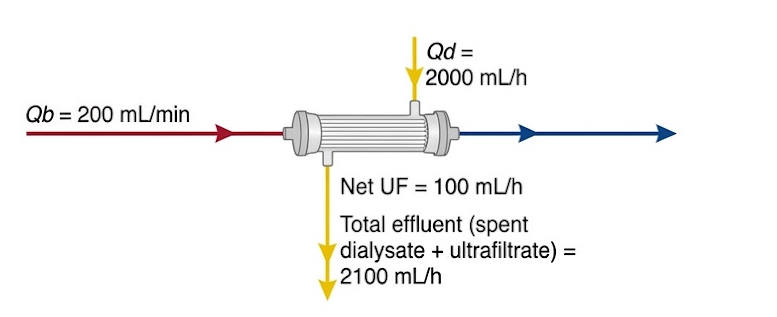
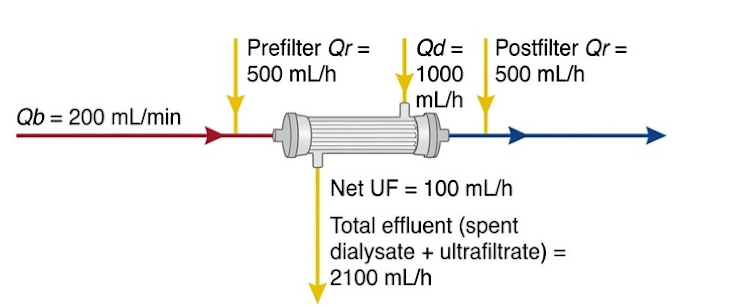
Qr: 500 mL/hour pre-filter and 500 mL/hour post-filter
Qd 1000 mL/hour
UFnet 100 mL/hour
Qef equals 2100 mL/hour.
4.Slow continuous ultrafiltration
Slow Continuous Ultrafiltration – SCUF
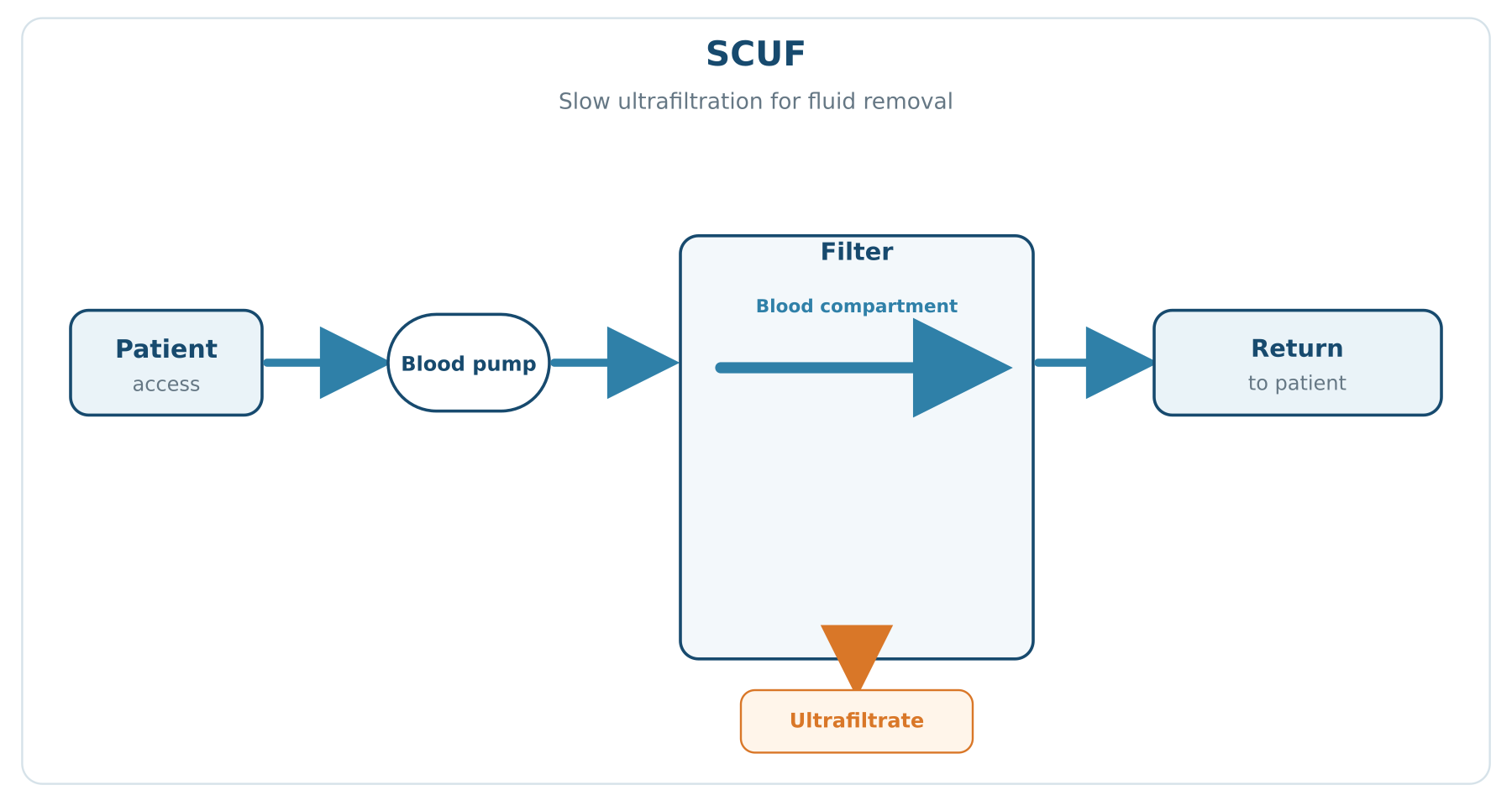
SCUF does not usually use dialysate or replacement fluid; its purpose is slow fluid removal.
Ultrafiltrate is generated by a hydrostatic pressure difference across the hemofilter, and blood flow Qb is usually 100–200 mL/minute. Permeable solutes move across the membrane with water, so clearance is not zero, but is limited compared with modalities designed for solute removal by diffusion or large convection volumes.
This modality is selected when the primary need is fluid removal rather than correction of a solute disturbance requiring therapeutic clearance. [1,3]
UNLOAD compared venovenous fluid removal with intravenous diuretics in patients with acute heart failure. The primary endpoints were weight change and dyspnea at 48 hours, and no statistical difference in mortality was demonstrated. CARRESS-HF, involving 188 patients with acute heart failure, increased creatinine and persistent congestion, compared ultrafiltration with stepped pharmacological therapy. The change in kidney function at 96 hours was better with pharmacological therapy, weight loss was similar, and more serious adverse events were recorded in the ultrafiltration group. [6,7]
Components and the blood and fluid pathways
The circuit usually consists of a dual-lumen vascular access (dialysis catheter), blood pump, filter, pumps for dialysate or replacement solutions, and systems for pressure monitoring and fluid balancing. Safe operation requires following the device and filter instructions and the unit's approved protocol.
Net ultrafiltration and fluid balance
In circuit equations, UFnet denotes net ultrafiltration at the machine level: the net removal of water from the circuit after accounting for replacement solution. This does not automatically equal the patient's net fluid balance, which includes all fluids entering and leaving the body.
Pressure Monitoring in the CKRT Circuit
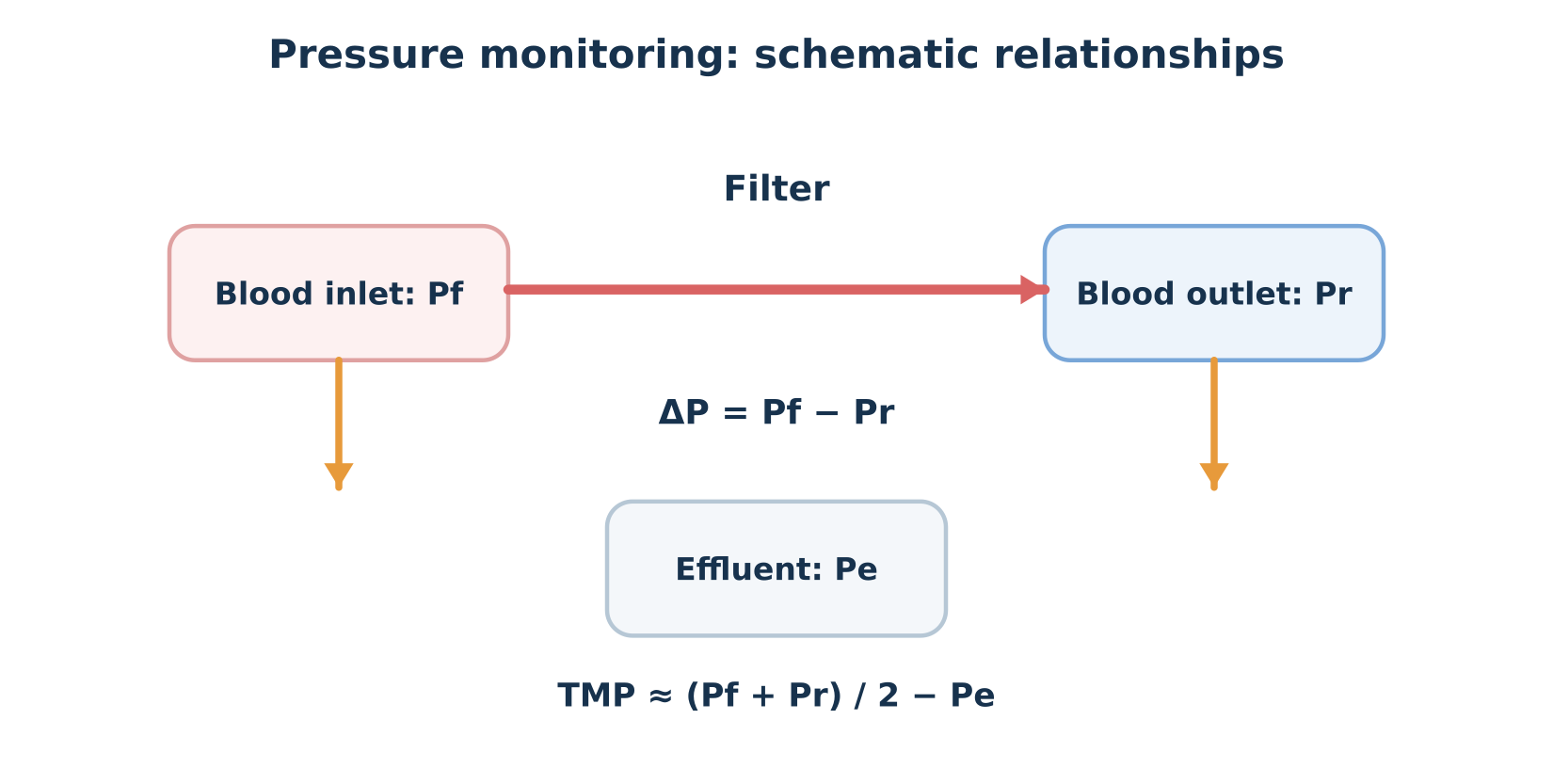
Pressure site names and precise definitions vary by device. In the following illustrative diagram:
•
Pa denotes pressure in the vascular access line before the blood pump (conventionally called arterial or the red line).
•
Pf denotes pressure between the blood pump and the hemofilter, also called filter pressure.
•
Pr denotes pressure in the blood return line to the patient (conventionally called venous or the blue line).
•
Pe denotes pressure in the effluent line.
Pressure inside the filter itself cannot be measured easily, but can be estimated by averaging the pressures at the filter inlet and outlet.
Thus, approximate filter pressure = (Pf + Pr) / 2
In general, the device manufacturer's definitions should be used.
Representation of pressures and the ΔP and TMP relationships
Vascular Access Dysfunction
Vascular access dysfunction often presents with markedly abnormal values of both:
Pa becomes very negative
Pr becomes very positive.
Hemofilter Clogging
With clogging, the blood pathway through the filter remains open, but membrane pores become blocked by protein adhesion (adsorption). This increases transmembrane pressure (TMP) without a substantial change in the pressure difference across the filter (ΔP).
Hemofilter Clotting
In contrast to pore clogging, clotted blood blocks both the blood pathway and the membrane pores (clotting). Consequently, ΔP and TMP rise simultaneously.
Properties of modern filters
Modern CKRT machines use hollow-fiber high-flux hemofilters that can be used for hemodialysis or hemofiltration.
High-flux filters have become the usual standard in developed countries for both IHD and CKRT.
High-flux denotes the membrane's ability to remove larger substances during hemodialysis, with internal filtration and backfiltration particularly contributing to larger-substance removal.
With high-flux filters, the upper limit of molecular size removable during hemodialysis may reach approximately 10,000 daltons, much higher than with low-flux filters historically used in IHD, which had an approximate limit of 1,000 daltons.
Using high-flux filters for hemofiltration may allow removal of molecules up to approximately 40,000 daltons.
It is important to note, however, that these size limits may overestimate actual in-vivo capability, because the effective membrane pore size decreases within hours of use as plasma proteins adsorb onto the filter.
The difference between flux and efficiency
Unlike flux, efficiency describes the maximum small-molecule clearance that a given filter can intrinsically achieve.
This efficiency primarily reflects:
— Membrane surface area.
— Membrane permeability to solutes.
Because clearance during continuous dialysis is usually limited by Qd and/or Qr, the filters used in these machines are generally less efficient than IHD filters because of their smaller surface area.
For example:
In CKRT: approximately 1 m²
In IHD: approximately 2 m²
These are typical sizes for adults.
Membrane charge and adsorption
Membrane charge has some effect on solute removal, particularly middle molecules removed by convection, and on the tendency of solutes to adsorb onto the membrane.
In general, middle and large molecules are less likely to adsorb onto uncharged membranes, such as those made from:
Polyarylethersulfone – PAES, compared with negatively charged membranes such as AN69, composed of an acrylonitrile and sodium methallyl sulfonate copolymer.
Uncharged membranes may therefore be less susceptible to pore clogging than negatively charged membranes.
Removal of larger molecules during hemodialysis
Although small-solute removal during hemodialysis occurs mainly by diffusion,
Larger-solute removal occurs mostly through internal filtration and backfiltration during hemodialysis.
What are internal filtration and backfiltration?
They are water movement across the dialyzer membrane in two different directions within the same high-flux HD session, owing to changes in transmembrane pressure along the capillaries. This phenomenon is well established in high-flux membranes.
Explanation:
Near the blood inlet, hydrostatic pressure inside the capillaries is relatively high. The local TMP therefore points in the direction: Blood → membrane → dialysate
Some plasma water crosses into the dialysate compartment. This is internal filtration or direct filtration. As water crosses, it carries substances able to pass through the membrane, producing convection / solvent drag. This is particularly important for removing middle molecules that diffuse slowly, such as β₂-microglobulin. OUP
As blood approaches the end of the filter, pressure inside the capillaries falls because of resistance along the fibers. Dialysate pressure also changes, so the TMP sign may reverse locally, producing:
Dialysate → membrane → blood
Some dialysate water then crosses the membrane into the blood. This is called backfiltration.
A very important point: backfiltration itself does not remove toxins from the blood. It is therefore more precise to say that the combination of internal filtration + backfiltration allows a large volume of internal convective fluid movement even when the required net ultrafiltration from the patient is small.
It is therefore better to say: the high permeability of a high-flux membrane allows internal filtration and backfiltration along the filter, generating internal convective transport that enhances removal of relatively medium-sized and large molecules compared with diffusion alone.
In online HDF, this principle is increased substantially and systematically: a large plasma water volume is removed by convection and then replaced with substitution fluid. Middle-molecule removal is therefore usually much greater than in conventional high-flux HD. The latest EuDial/ERA consensus document confirms this distinction.
An important safety point: because backfiltration means dialysate may cross into the patient's blood, dialysate purity, particularly ultrapure dialysis fluid, is critically important to prevent transfer of contaminants and endotoxin fragments.
Solute clearance
Filter clearance of small solutes such as potassium and urea can be estimated from Qef once membrane permeability becomes stable, that is, once the membrane's adsorption saturation limit is reached.
Solute clearance equals the effluent rate multiplied by the sieving coefficient (S).
That is: Clearance = Qef × S
The sieving coefficient is:
S = Cef / Cp
Where:
Cef: solute concentration in the effluent.
Cp: solute concentration in plasma.
The sieving coefficient is determined by the membrane reflection coefficient (Reflection coefficient, σ):
S = 1 − σ
A solute with S = 1 passes freely through the filter, whereas a solute with S = 0 does not pass through the membrane at all.
For middle molecules, clearance depends on membrane properties and ultrafiltration volume, that is, convective clearance.
For substances undergoing adsorption, removal from blood may exceed the calculated clearance through the filter even when S is low, causing a mismatch between blood clearance and clearance through the filter.
Removal of inflammatory mediators
Notably, middle molecules that can be removed or adsorbed during hemofiltration include several inflammatory mediators, such as IL-1, IL-6, IL-8 and tumor necrosis factor-α.
Convective removal of these cytokines has been studied using high-volume hemofiltration (HVHF),
High-Volume Hemofiltration, as treatment in patients with septic acute kidney injury, septic shock, after cardiac surgery, and in other critical illnesses.
Although some studies showed that HVHF may reduce vasopressor requirements, randomized controlled trials did not demonstrate a benefit in important clinical outcomes such as mortality or recovery of kidney function.
Trials also did not demonstrate definite superiority of CVVH, CVVHD, CVVHDF or any particular device.
Ultimately, in many centers the choice of CKRT modality or device therefore depends more on local equipment availability and practice patterns than on theoretical differences between solute removal mechanisms or the specific properties of each device.
References
1. Claure-Del Granado R, Clark WR. Continuous renal replacement therapy principles. Semin Dial. 2021;34(6):398–405. doi:10.1111/sdi.12967. Link
2. KDIGO. Clinical Practice Guideline for Acute Kidney Injury. Kidney Int Suppl. 2012;2:1–138. Sections 5.8.4 and 5.8. Link
3. Tandukar S, Palevsky PM. Continuous renal replacement therapy: who, when, why, and how. Chest. 2019;155(3):626–638. doi:10.1016/j.chest.2018.09.004. Link
4. Park HC, Lee YK. Who is the winner, pre-, post-, or mixed-dilution hemodiafiltration? Kidney Res Clin Pract. 2021;40(3):332–334. doi:10.23876/j.krcp.21.172. Link
5. Mohajerani F, Clark WR, Ronco C, Narsimhan V. Mass transport in high-flux hemodialysis: application of engineering principles to clinical prescription. CJASN. 2022;17(5):749–756. doi:10.2215/CJN.09410721. Link
6. Costanzo MR, et al. Ultrafiltration versus intravenous diuretics for patients hospitalized for acute decompensated heart failure (UNLOAD). J Am Coll Cardiol. 2007;49(6):675–683. doi:10.1016/j.jacc.2006.07.073. Link
7. Bart BA, et al. Ultrafiltration in decompensated heart failure with cardiorenal syndrome (CARRESS-HF). N Engl J Med. 2012;367:2296–2304. doi:10.1056/NEJMoa1210357. Link
8. KDIGO. Acute Kidney Injury and Acute Kidney Disease Guideline Update. Official status page for the 2026 public-review draft. Link