Diet and nutrition
Phosphate binders in CKD: comparison and practical characteristics
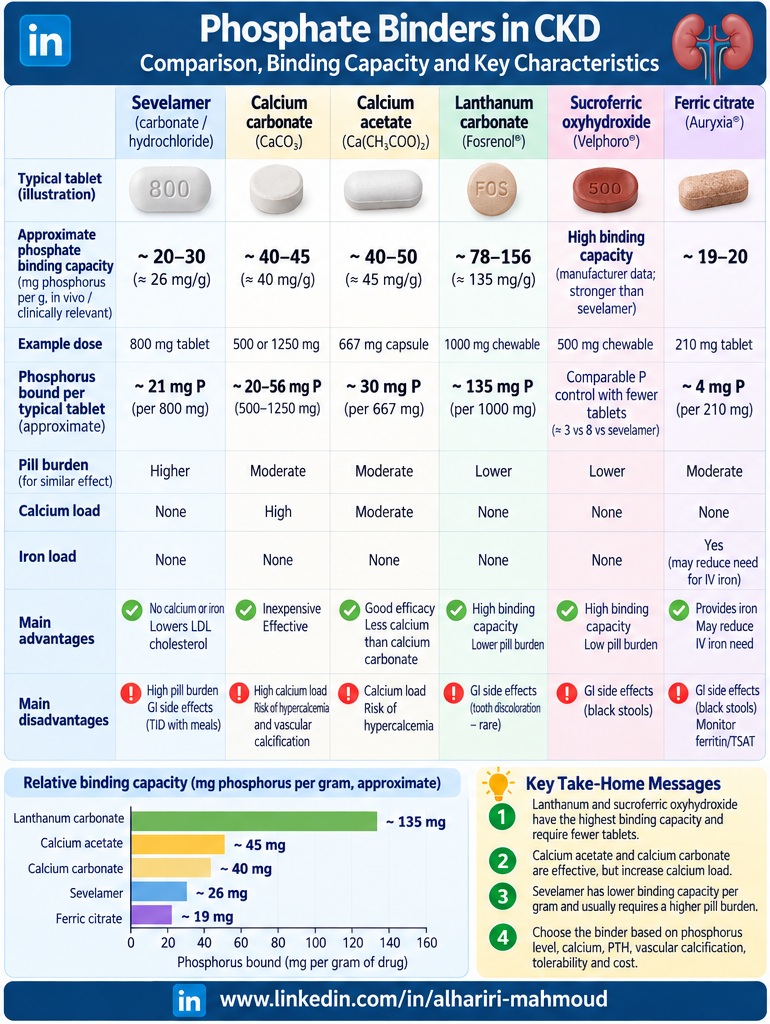
A visual comparison of common phosphate binders, including binding capacity, dosing, advantages, and disadvantages.
Why compare phosphate binders?
Phosphate binders are taken with meals to reduce phosphate absorption from food. The best choice is individual: it depends on laboratory trends, calcium exposure, pill burden, iron status, gastrointestinal tolerance, cost, and the plan agreed with the kidney team.
What the comparison image shows
The visual table compares commonly used options by binding capacity, practical dosing characteristics, advantages, and limitations. It is a reading aid for a clinical conversation, not a dose calculator or a substitute for the product information supplied with a medicine.
Take the medicine exactly as prescribed and ask the renal team or pharmacist how it should be timed with meals and other medicines. Do not start, stop, or switch a binder because of the table alone.
Key points
- A visual comparison of common phosphate binders, including binding capacity, dosing, advantages, and disadvantages.